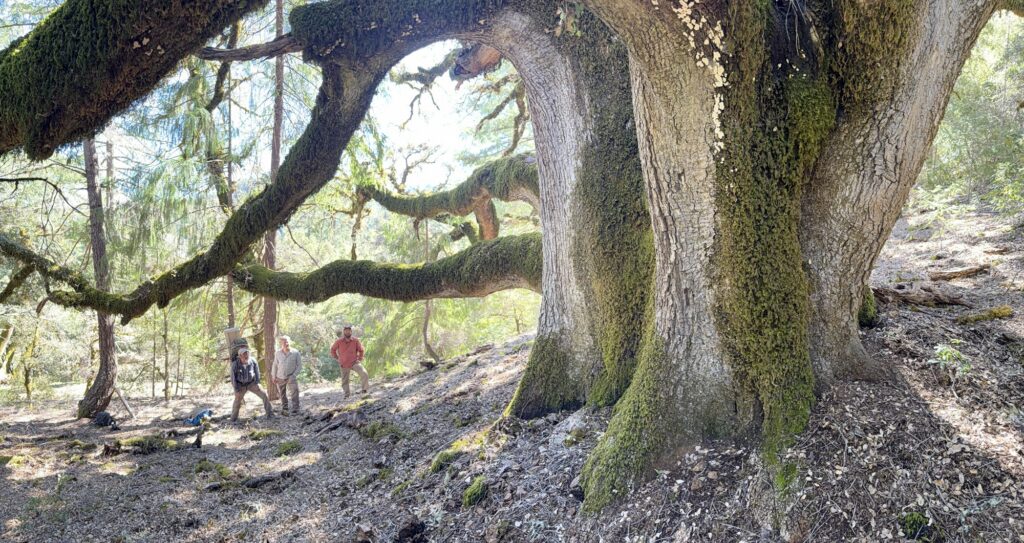
It is with a heavy heart that I share the loss of the magnificent San Gabriel Oak (Quercus chrysolepis), a tree that first captured my imagination in 2002 and that I returned to measure in 2015. This ancient giant was destroyed in the 2024 Bridge Fire.
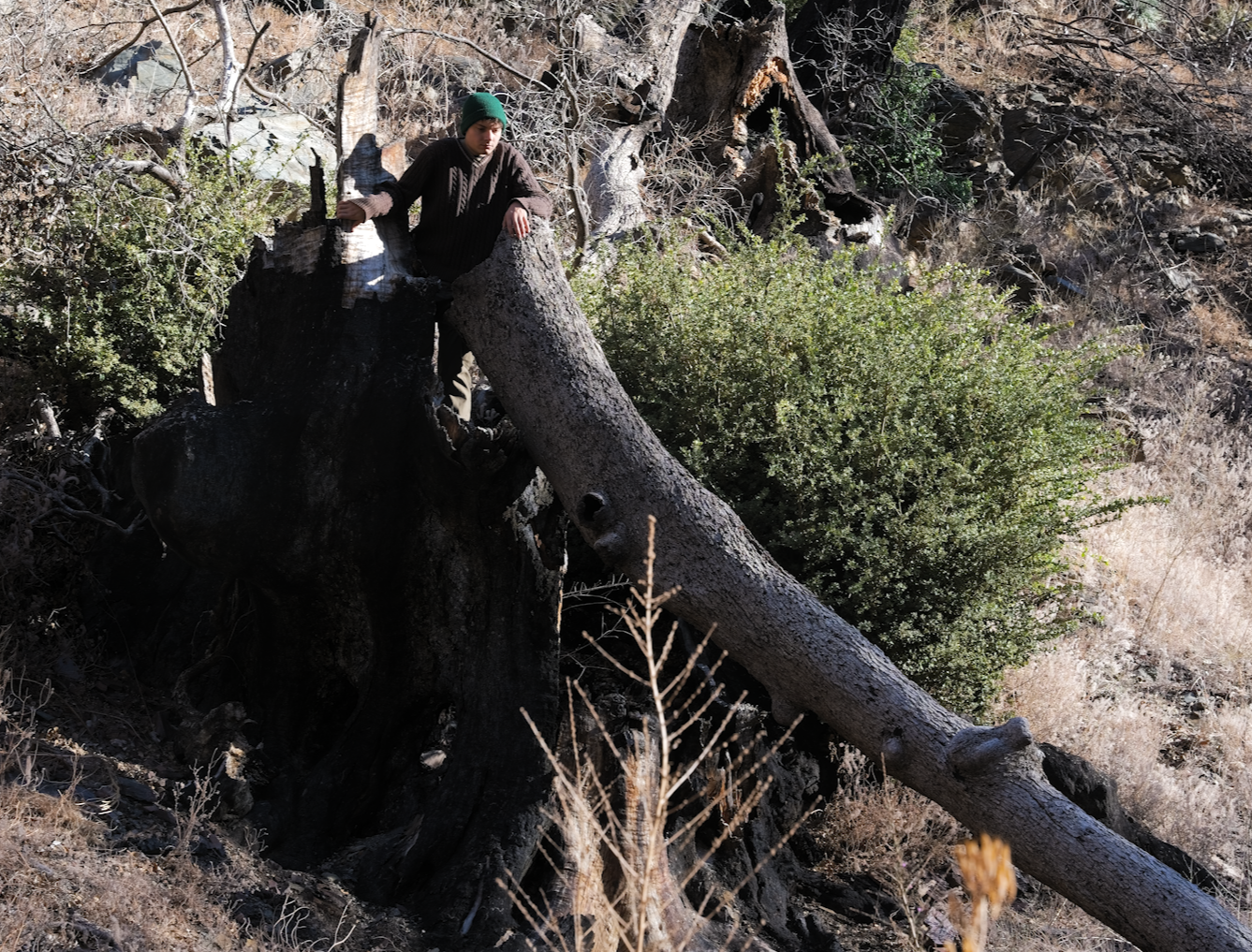
In early November 2026, filmmaker and fellow tree enthusiast Ben Greco contacted me after hiking into the East Fork of the San Gabriel River to visit the oak. Following the directions in this original post, Ben and a friend reached the site and found only the enormous burned remains of its trunk. His photographs, with a person standing beside the charred base for scale, offer a sobering reminder of what once stood here.
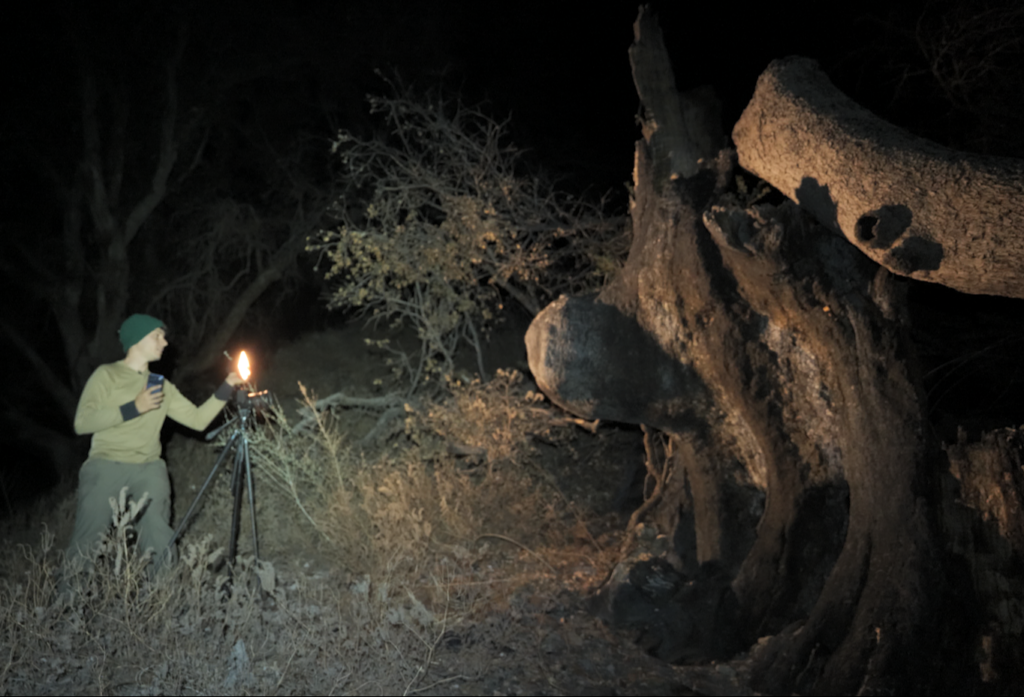
Photographs of the San Gabriel Oak’s remains, October 2026, courtesy of Ben Greco.
When I measured the San Gabriel Oak in 2015, it had a circumference of 27 feet 9 inches, stood 93 feet tall, and supported a crown spanning 92 feet. For centuries, this tree endured drought, storms, and fire, growing into one of the most remarkable canyon live oaks I have ever encountered. To think that it survived so much, only to be lost in our lifetimes, is difficult to comprehend.
There is a glimmer of hope. Canyon live oaks can resprout after fire, and the ancient root system may still be alive beneath the charred stump. New shoots are emerging, carrying forward a life that began centuries ago. The giant is gone, but its story may not be over.
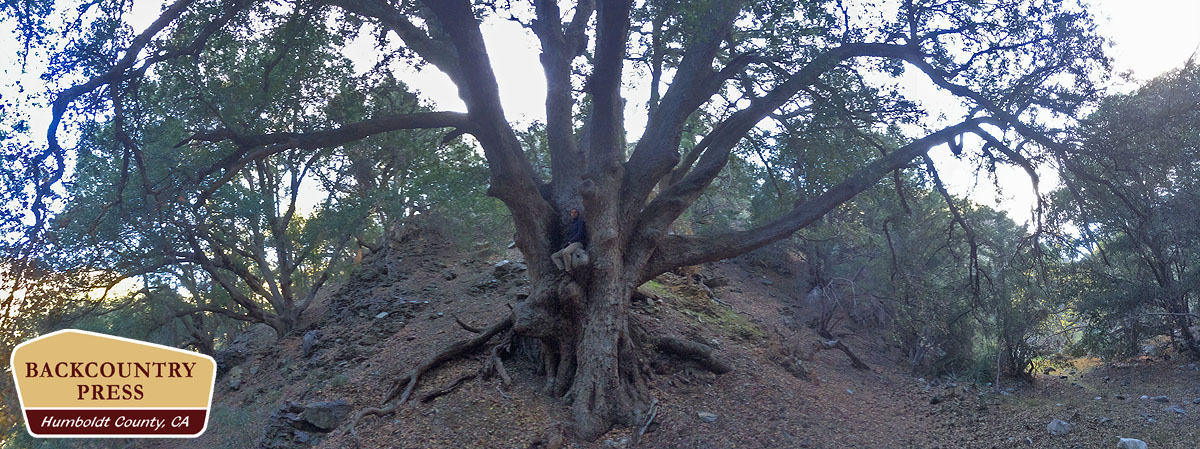
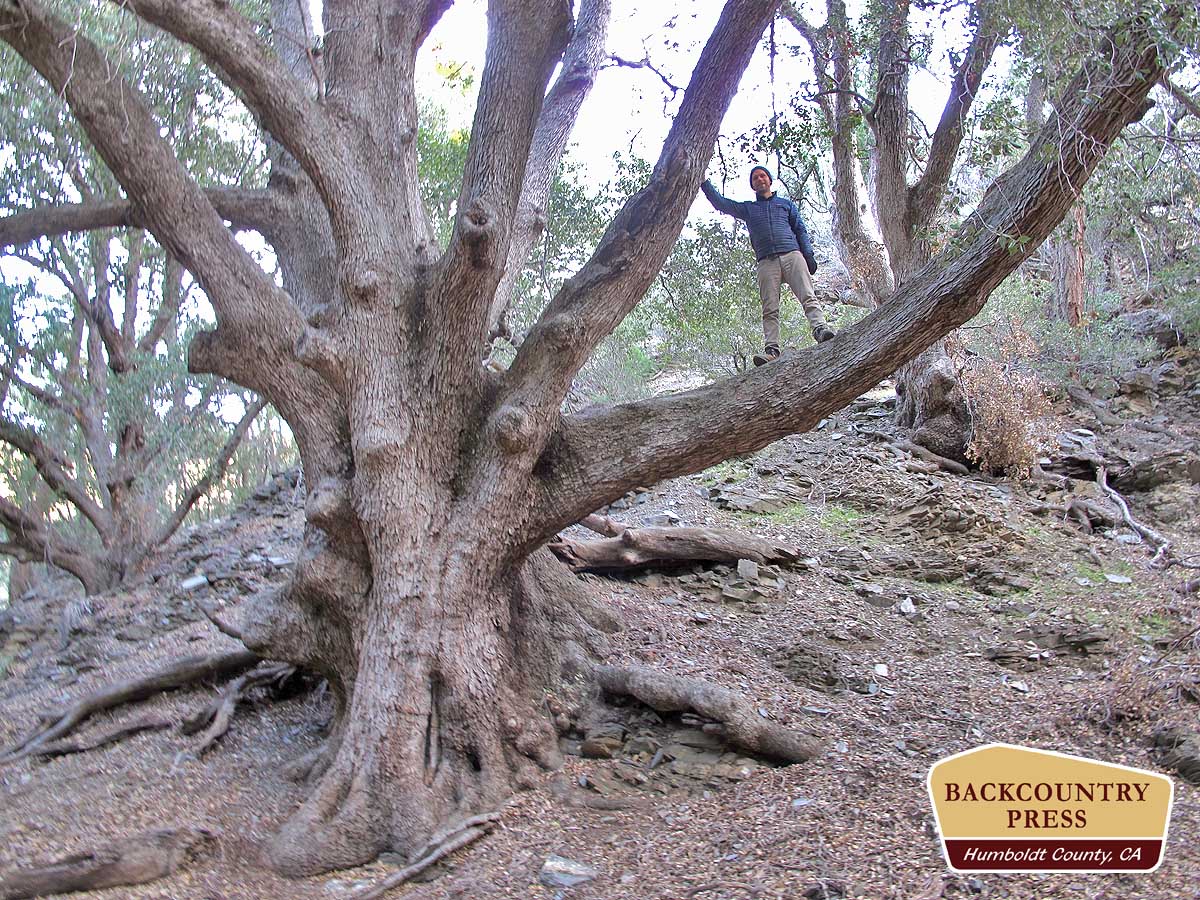
Fortunately, other ancient canyon live oaks remain. In the hills of Humboldt County, the Iaqua Oak continues to stand, a remarkable survivor whose story I explored earlier this year in The Iaqua Oak and the Future of Old Trees. I have also been fortunate to participate in efforts to protect this tree through thoughtful fuels reduction and restoration work. Farther south, the giant canyon live oaks of the San Bernardino Mountains, including the record-setting San Bernardino Oak discussed in this original post, remain living monuments to the resilience of this species.
But how long will these trees endure?
Climate change is real, and its effects are increasingly visible across California’s forests. Rising temperatures, prolonged drought, and the potential for more extreme fire behavior are reshaping landscapes that took centuries to develop. Fire has always been part of California’s ecology, and canyon live oaks are well adapted to it, often resprouting from their bases after their crowns are killed. But resilience has limits. A thousand-year-old tree cannot simply replace its ancient trunk, expansive canopy, and ecological legacy in a few decades.
Watching these old trees die is hard. They are more than botanical curiosities or records in a big-tree registry. Their lives connect us to a California that existed long before us, and their loss reminds us how quickly that continuity can be broken.
I have spent much of my life seeking out remarkable trees, documenting their stories, and sharing the wonder they inspire. Increasingly, that work also means bearing witness to their decline. The loss of the San Gabriel Oak feels personal, but it is also part of a much larger story unfolding across western North America.