There is a quiet confession from me for the Field Guide to Manzanitas: I did not set out to make it because I was an expert. I made it because I wasn’t.
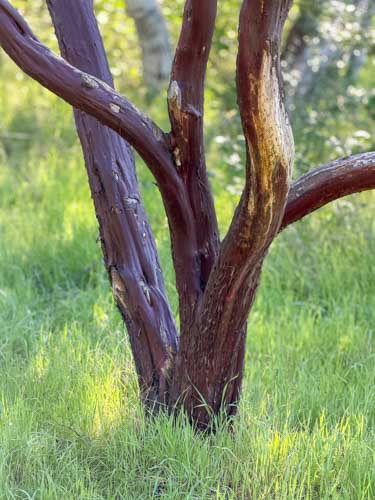
Years ago, while wandering through California’s chaparral and woodlands in pursuit of conifers, I began to notice how little I understood about the understory beneath them. I admired the polished red limbs of manzanitas and could recognize the genus on sight, but naming a plant to species was usually beyond me. The subtleties—leaf, inflorescence, burl structure, glandular hairs, habitat nuance.
So I did what I do when faced with a botanical or ecological mystery: I made a book.
The knowledge I sought belonged, and still belongs, to others. To botanists like Tom Parker and Michael Vasey, whose decades of patient study gave shape and authority to the text. To the luminous eye of Jeff Bisbee, who revealed each species in crisp detail. I did the editing, shaping, publishing—so everything could live in one place. Since then, the book has carried me into many landscapes.
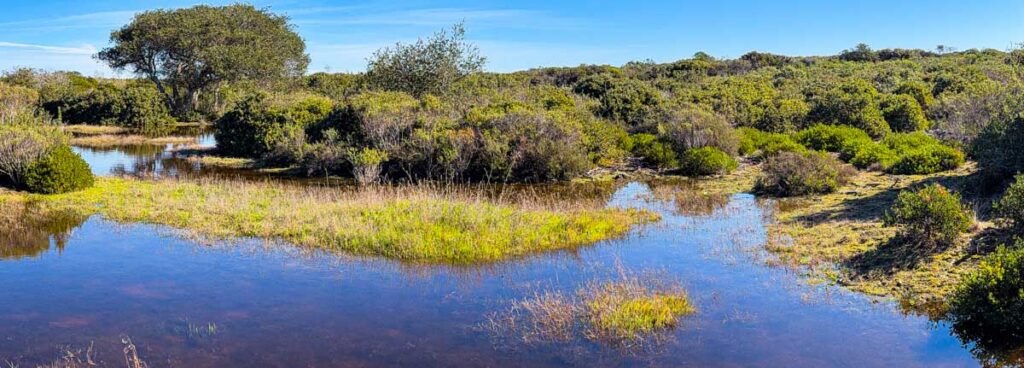
Fort Ord: A Landscape in Recovery
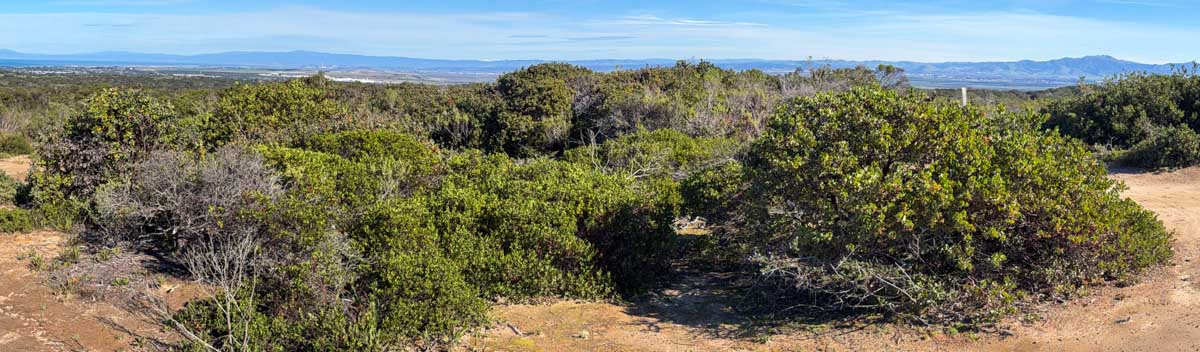
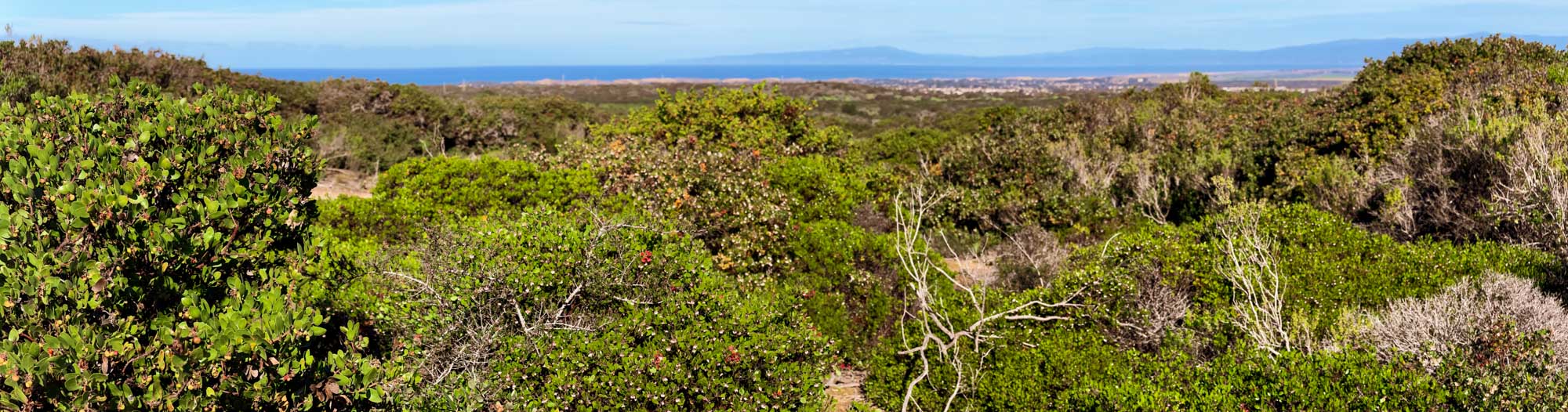
This weekend, for the first time, we wandered into Fort Ord National Monument. Once a vast U.S. Army training ground for much of the twentieth century, it is recovering—stitched back together as public open space, with maritime chaparral reclaiming the silence.
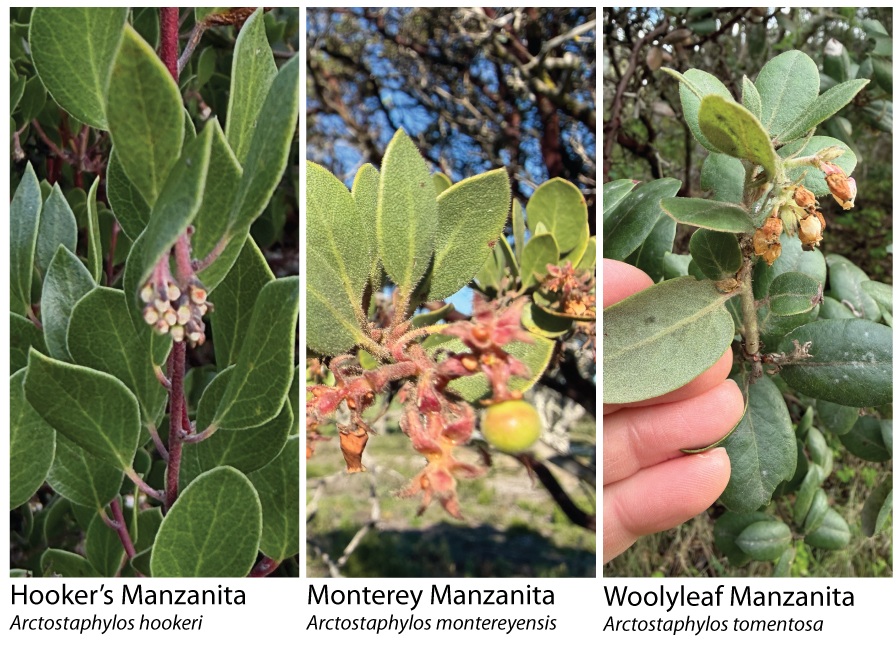
I set out on a hike and pulled the guide from my pack, the same small volume we once labored over on screens and proofs. And there, I met three species.
- Arctostaphylos hookeri
- Arctostaphylos tomentosa
- Arctostaphylos montereyensis
It took time to distinguish them. Two hours in fact. Time, more than any tool, revealed the intricacies of each. Eventually they became distinct. Hooker’s manzanita hugging the ground. The tomentose leaves of tomentosa, carrying their felted undersides. The local, upright bearing of montereyensis, rooted in its narrow geography.
One absence lingered. I did not find Arctostaphylos pumila but this feels less like a failure than an invitation to return to Fort Ord.
The Humility of Making What You Need
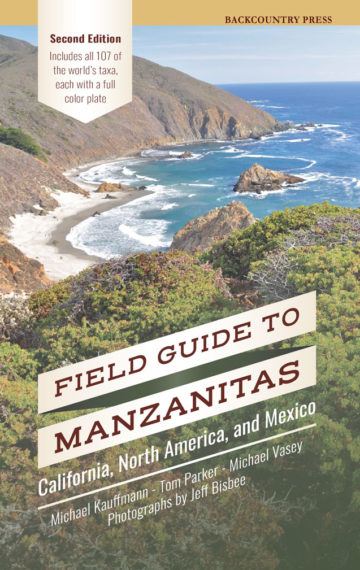
What moved me most was that the book worked. The act of gathering knowledge years ago rippled forward. The guide did what field guides are meant to do: it slowed me down. It invited comparison.
There is something powerful about learning the names of the plants where you stand. Manzanitas are notoriously difficult. Hybridizing, local, variable—each species holds its own evolutionary story, shaped by soil chemistry, fog frequency, fire interval, and time.
Our little book has become something of a cult classic among native plant lovers. That still surprises me. Perhaps what resonates is not perfection but care—the sense that this guide was made by people who love these plants deeply. I am grateful to have played a part in bringing that love into print.