Original Publication DATE: 11/7/2012
A sequence of five elevated marine terraces along Jug Handle Creek in coastal Mendocino County constitutes a nationally and internationally famous ecological staircase. So outstanding is the combination of canyons, terraces and ancient dunes, tall redwoods and firs, bishop pine forest and dwarfed pines and cypresses that…It has become a Mecca for naturalists, botanists, ecologists, pedologists (soil scientists), geographers and nature-oriented laymen. It is being praised as the best preserved ecological showplace of coastal landscape evolution anywhere in the northern hemisphere.
–Hans Jenny 1973
Throughout the Pleistocene, repeated climate shifts caused sea levels to rise and fall as the polar ice sheets expanded and retreated. During periods of stable sea level, waves carved broad marine terraces along the coast. Over time, tectonic uplift slowly raised these terraces above the ocean, creating the remarkable landscape seen today in Mendocino County. As soil scientist Hans Jenny observed, this is the finest preserved example of coastal landscape evolution in the Northern Hemisphere.
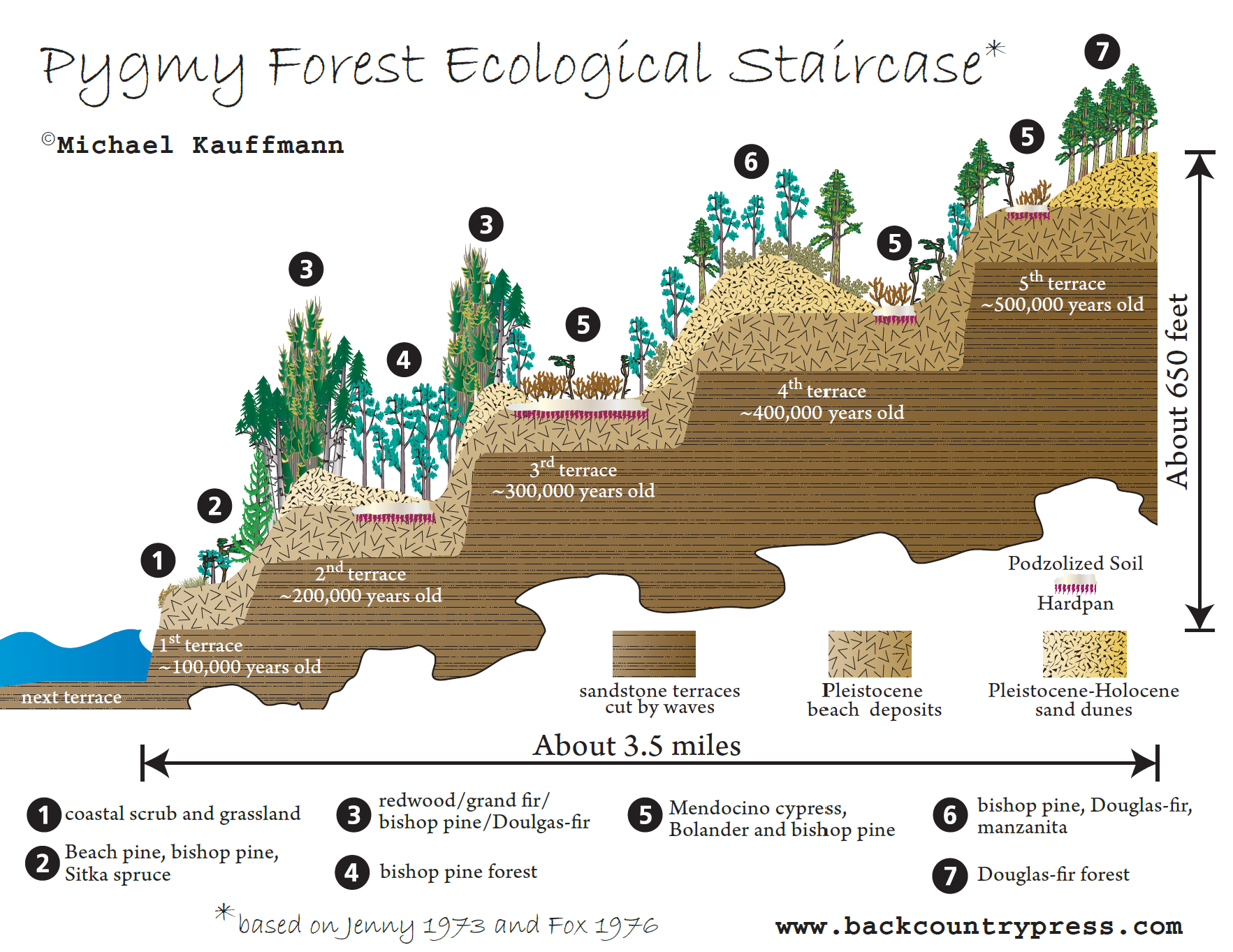
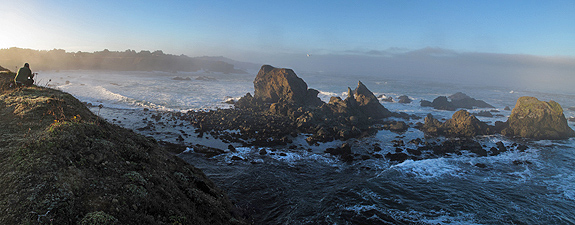
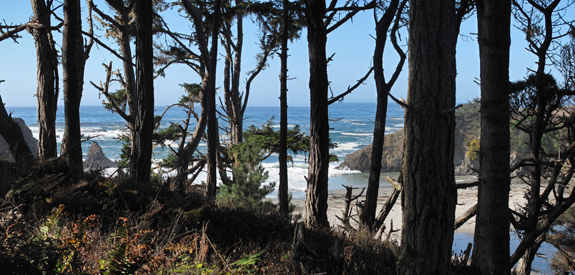
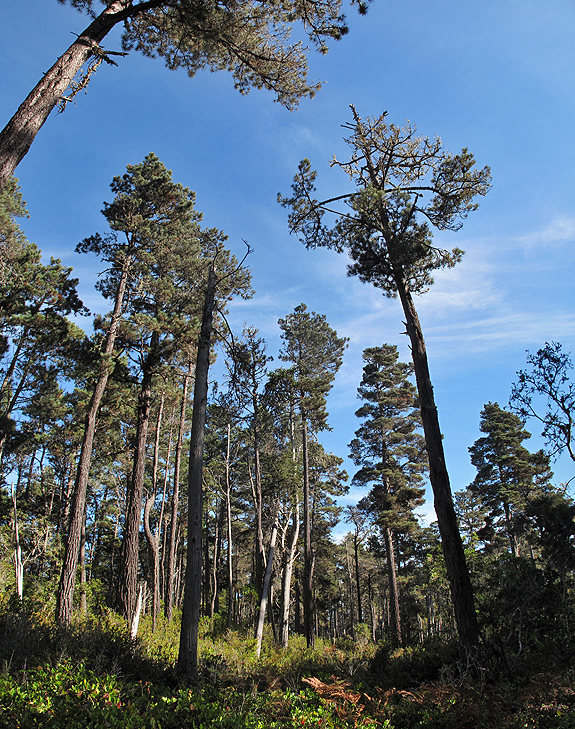
As the terraces formed, waves, wind, and streams deposited layers of sand, gravel, clay, and other sediments of varying depths across the landscape. Along the youngest terrace nearest the Pacific, salt-laden winds shape coastal bluffs into grasslands, scrub, and the wind-pruned “bonsai” forests of bishop pine. Farther inland, beyond the reach of ocean spray, abundant rainfall, ancient Pleistocene and Holocene dunes, and the steady accumulation of nutrient-rich conifer needles create ideal conditions for towering forests with deep roots and lofty canopies. Yet the staircase’s most remarkable story begins just east of these ancient dunes.
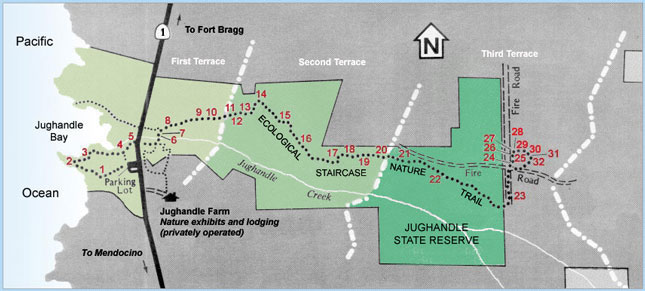
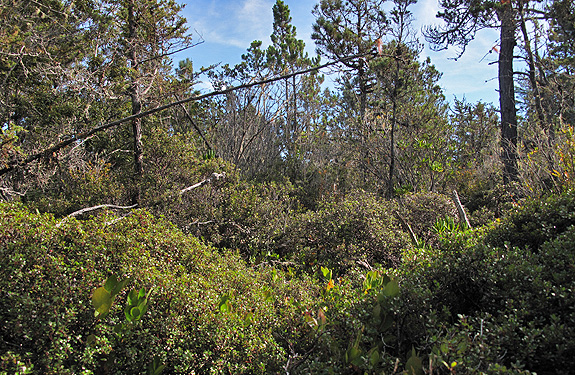
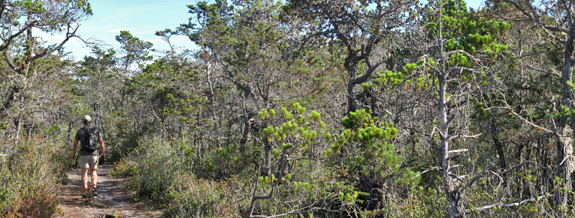
Beginning on the middle of the second terrace and continuing across each older step, ancient sand dunes block surface drainage, forcing groundwater to seep slowly across the landscape. Springs and seeps create shallow basins that drain only gradually. Over thousands of years, this persistent flow washes away nutrients such as calcium and potassium from the ancient beach deposits, leaving behind acidic, nutrient-poor hardpan soils. This process, known as podzolization (from the Russian word podzol, meaning “ash soil”), forms a distinctive Podzol Horizon that is especially inhospitable to most plants.
These unusual soils create edaphic islands where only specially adapted species can thrive. Isolated by their harsh environment, several plants have evolved into local endemics, including Mendocino cypress (Cupressus pygmaea), Bolander pine (Pinus contorta subsp. bolanderi), and Fort Bragg manzanita (Arctostaphylos nummularia subsp. mendocinensis). What follows is a photographic journey through the ecological staircases of Jug Handle State Natural Reserve and the remarkable plants that define each step.
Sources:
- Fox, W. 1976. Pygmy Forest: an ecological staircase. California Geology. 29(1) 1-25. (LINK)
- Jenny, H. 1973. The pygmy forest ecological staircase: A description and interpretation. Monograph University of California, Berkeley, Ca. (LINK)
Other resources:
- Plant List for Jug Handle State Reserve.
- USGS: Landscapes from the waves
COMMENT:
AUTHOR: Fred Overmars
DATE: 5/21/2013 8:00:42 AM
Wonderful description thank you. The link for Hans Jenny’s 1973 publication doesn’t seem to be working – how else might I get a copy? -Fred
Thanks Fred- the link works from my computer. Try right clicking and “save link as” or google the citation. -Michael
—–
COMMENT:
AUTHOR: Fred Overmars
DATE: 10/17/2013 1:56:15 AM
Thanks Michael,
I’ve sought to track it down in New Zealand libraries, but no luck. And I still cant get your link to work (doesn’t for overseas IP addresses?). I’d be delighted if you could email it. The pygmy forest is on my life list – its chronosequence may be esoteric to many but fascinates me. Fred
—–
COMMENT:
AUTHOR: Michael E. Kauffmann
DATE: 10/17/2013 3:26:48 AM
Fred- the pygmy forests are indeed wonderful, and should be on everyone’s life list! I am unclear what you are trying to track down. I did check both links at the end of the blog post and they work for me. Send along more details and I could email the document you are interested in.
Hi Michael, Thanks for interesting facts about Pygmy Forest. Organizations her on the Mendocino Coast are having an awareness weekend Sept 9.10 and 11. (Find the Magic! Rediscovering our Pygmy Forests!) May we have your permission to use your Ecological Staircase diagram in some of our displays? It’s the best I’ve seen!! Thanks Ruth Sparks (Pygmy Forest Committee, Fort Bragg Garden Club –see: pygmy-forest.com.)
Of course! Click on the image to download the hi-res pdf.
I think you would enjoy reading “A Staircase Through Time” by Bruce Fenson in Pacific Discovery V30, 1977 (A publication of the California Academy Of Sciences).
I can’t find a link but an excerpt can be found at http://pygmy-forest.com/blog/lottiesblog-06.htm & I can sent you a copy of the article if desired.
Thanks Joshua- I look forward to checking it out.