San Bruno Mountain Manzanitas

Manzanitas of San Bruno Mountain County Park – An island of Artctostaphylos endemism

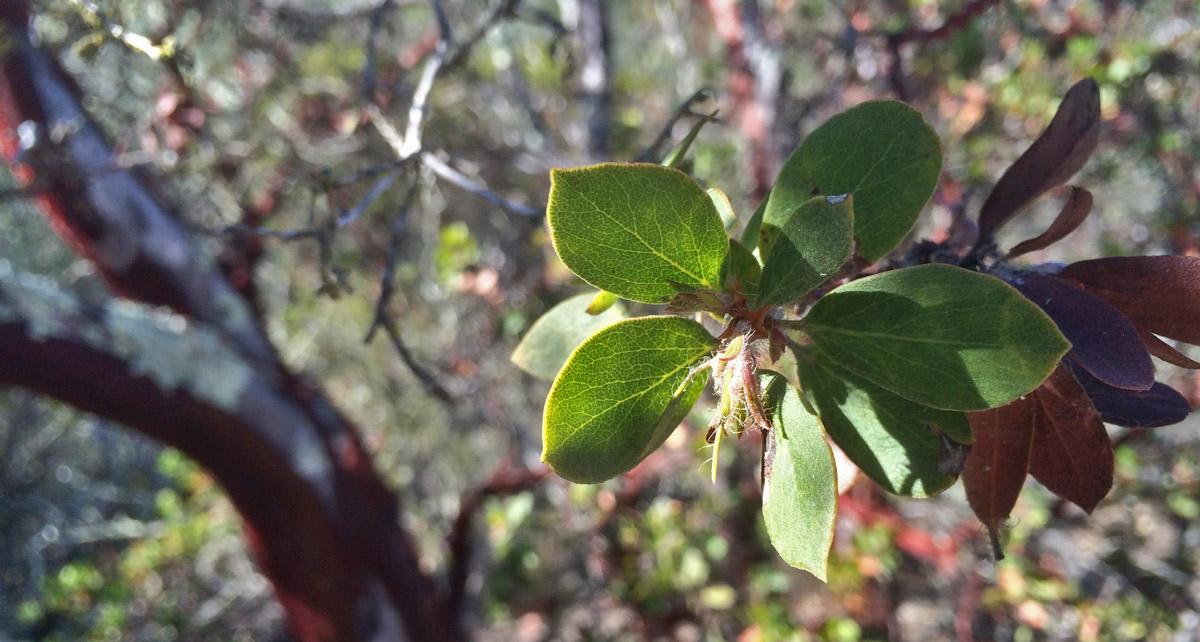
This region is the epicenter for “localized endemism” in manzanitas. Two manzanita species are found on this mountain and nowhere else (A. pacifica and imbricata) and both share space and time with a distinct form of bear-berry (A. uva-ursi), the equally rare Montara Mountain manzanita (A. montaraensis) and the more common brittleleaf manzanita (A. crustacea). The San Francisco Bay area is at the center of the range of biodiversity for the genus Arctostaphylos–which extends from just north of the Oregon-California border southward to northern Baja California, Mexico. Other nearby Bay Area rarities include the Franciscan manzanita (A. franciscana), Presidio manzanita (A. montana ssp. ravenii), and Marin manzanita (A. virgata) to name a few.
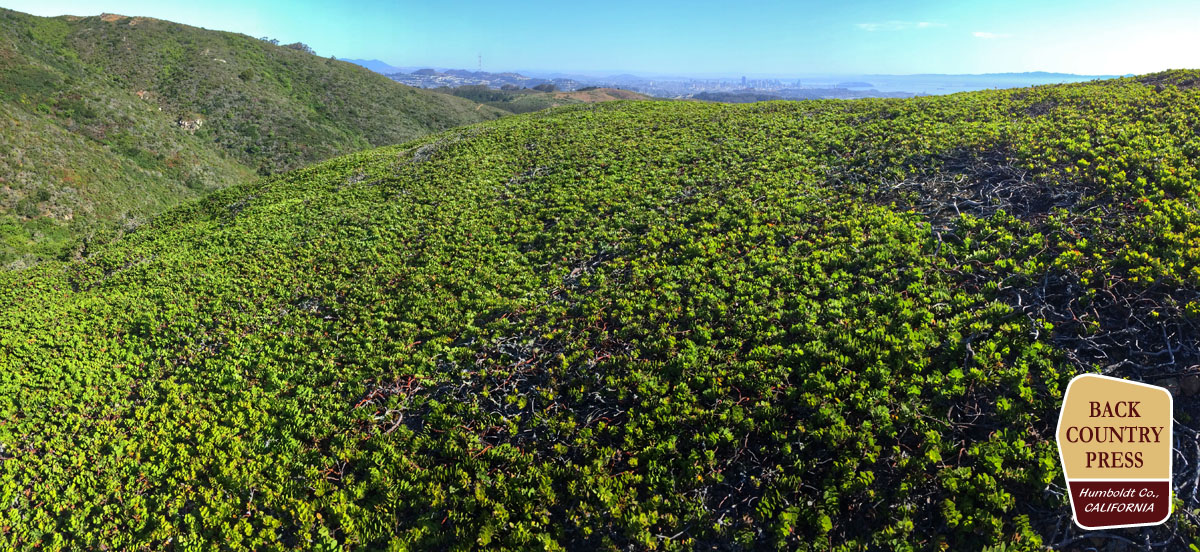
Downtown San Francisco, seen from San Bruno Mountain County Park.

Continue reading “San Bruno Mountain Manzanitas”

Manzanitas of San Luis Obispo County

SLO down and botanize

Excerpts below from Field Guide to Manzanitas

In the California Floristic Province, the genus Arctostaphylos is a particularly fine illustration of how long-term dispersal events lead to colonization and consequent adaptive radiation in a group of plants. Fossil records show that this genus has been migrating and adapting to climatic shifts for at least 15 million years. However, only in the past few million years has Arctostaphylos, commonly called manzanita for its berries’ resemblance to small apples, found its promised land. The California Floristic Province’s exceptionally diverse range of habitats, particularly of ones that provide a taste of the suboptimal, is perfect for manzanitas. A synergistic mix of climate stability, soil variability, topographic volatility, and fire frequency provides the perfect alignment of biotic and abiotic factors. Like many other California evergreens (including my beloved conifers!) these hardy plants have benefited from inhospitable environments wherein competition from many plants is reduced and their own adaptability to poorer growing sites allows them to thrive. This, somewhat ironically, has made the unassuming “little apple” the most species-rich shrub genus in the California Floristic Province.

Arctostaphylos pilosula
Arctostaphylos pilosula – an endemic species to the San Luis Obispo region.

Continue reading “Manzanitas of San Luis Obispo County”

Manzanita Country

Smokey Creek and South Fork Trinity River Along the Bigfoot Trail

Spring break offered the opportunity for a brief trip into the southern Klamath Mountains. The Bigfoot Trail was calling, and as I am working on a new map set for the trail, my goal was to check some of the route descriptions and enjoy the wilds of Trinity County. Our first significant snowfall of the rainy season locked me out of the Yolla Bolly-Middle Eel Wilderness with over a foot  above 4000′. So the lower elevations of the South Fork Trinity River became my destination. Here I would re-explore the Smokey Creek Trail and enjoy some quality time with my new friend, the manzanita.

ridgeline
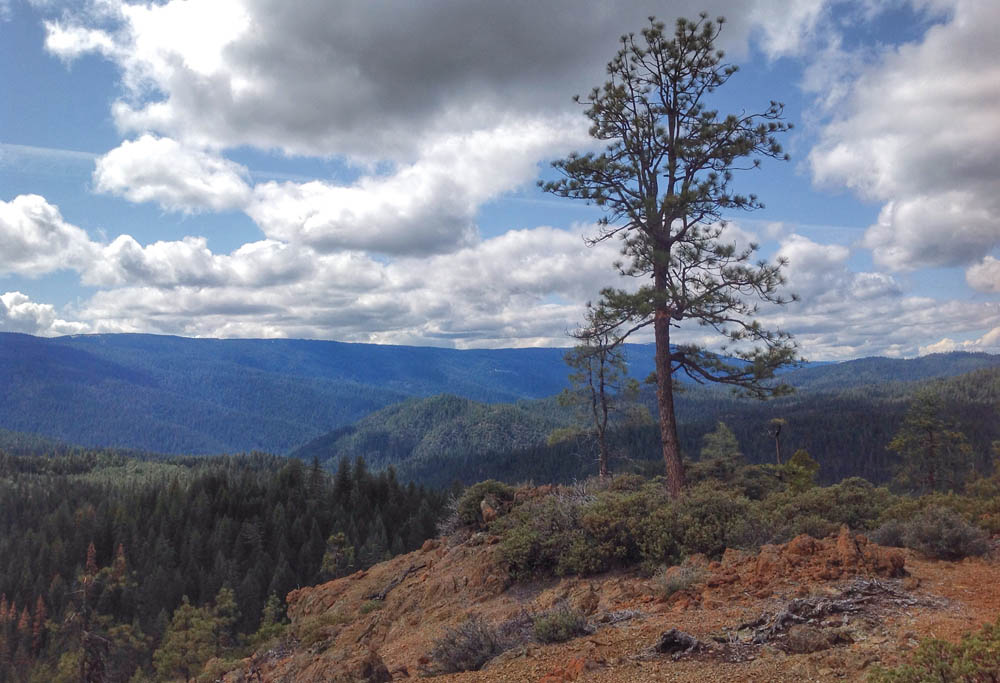
Jeffrey pine and common manzanita (A. manzanita) on a serpentine outcrop above the South Fork Trinity River.

Continue reading “Manzanita Country”

Sound Ecology – Klamath Mountain Conifers

I was recently asked by KHSU, here in Humboldt County, to write a two minute script for their Sound Ecology series. I chose to write about the conifers of the Klamath Mountains. I hope you enjoy this piece and are planning your next adventure into this botanical wonderland.


Here are the activities I will be a part of in the coming months, please join me!


May 11th, 2015 Backcountry Press presents:

A Field Guide to Manzanitas:
California, North America, and Mexico

Michael Kauffmann, Tom Parker, and Michael Vasey
Photographs by Jeff Bisbee

Stay Tuned!