My Favorite Fall Hikes

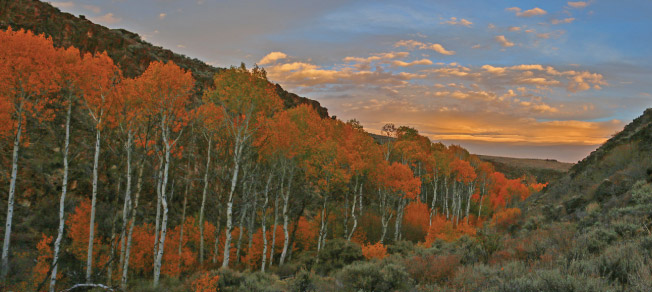
Quaking aspens (Populus tremuloides) in the Blackrock-High Rock Desert.

Fall is coming.

For me it is a time of rejuvenation and also my favorite season. With the shift of the California Current, rains begin to fall in California after a summer of drought. The high country along the Pacific Slope finds snow returning. While we retreat inside our homes, native plants and animals must adjust to the changes. Some birds migrate, mammals might hibernate, and some plants shed their leaves and “hibernate” for winter in their own way.

What follows is a journey across the Pacific Slope to four favorite fall hikes–excellent for colorful foliage. I’ve also included some of the plant species that will be found.
  1. Siskiyou Wilderness
  2. Pasayten Wilderness
  3. San Gabriel River National Monument
  4. Blackrock-High Rock Desert National Conservation Area
Continue reading “My Favorite Fall Hikes”

Choosing a Hike

How do you go about choosing a hike?

I have used various approaches which always involve careful map study, perusing the pages of hiking guides, and most importantly for me—studying field guides. As I get older, choosing a hiking destination is becoming more critical, with so much to see and even more to learn.

Hiking in the King Range.
King Range hiking.

Over time, I have gone about choosing a hike based more as a destination for discovery before any other factor. I think I first caught the hiking-for-natural-discovery bug while selecting a backpacking route exclusively to see condors in the Sespe Wilderness of southern California. When I moved to Humboldt in 2002, I graduated from bird destinations to plant exploring as I began searching out rare and unusual conifer species in our local mountains. This regular wilderness sideline blossomed into a Master’s Degree from Humboldt State University when I published my first book Conifer Country: A natural history and hiking guide to the conifers of northwest California in 2012. For 10 years I hiked to find and understand trees. These trees, and the places they grow, helped me develop a deeper passion for place and an understanding of the unique natural history of northwest California.

Continue reading “Choosing a Hike”

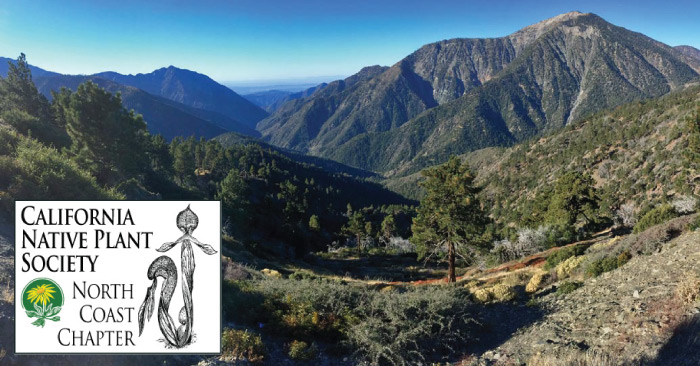
San Gabriel Mountains Presentation

Plant Exploring in the San Gabriel Mountains National Monument

Wednesday, May 11, 2016 @7:30 p.m. at the Arcata Masonic Lodge

From the California Native Plant Society North Coast Chapter:

Explorer, writer, and educator Michael Kauffmann will lead us on a journey into the Transverse Ranges of southern California to explore the world of what John Muir called the steepest mountains in which he ever hiked. Michael’s explorations began because of a Bigcone Douglas-fir mapping and monitoring project he is leading in conjunction with California Native Plant Society, but these studies have allowed him to make more discoveries–from one of the world’s largest oaks to the most isolated grove of Sierra junipers in the world. Michael will take us on a photographic journey from the mountain tops to the river canyons across one of the nation’s newest national monuments.

San Gabriel Mountains

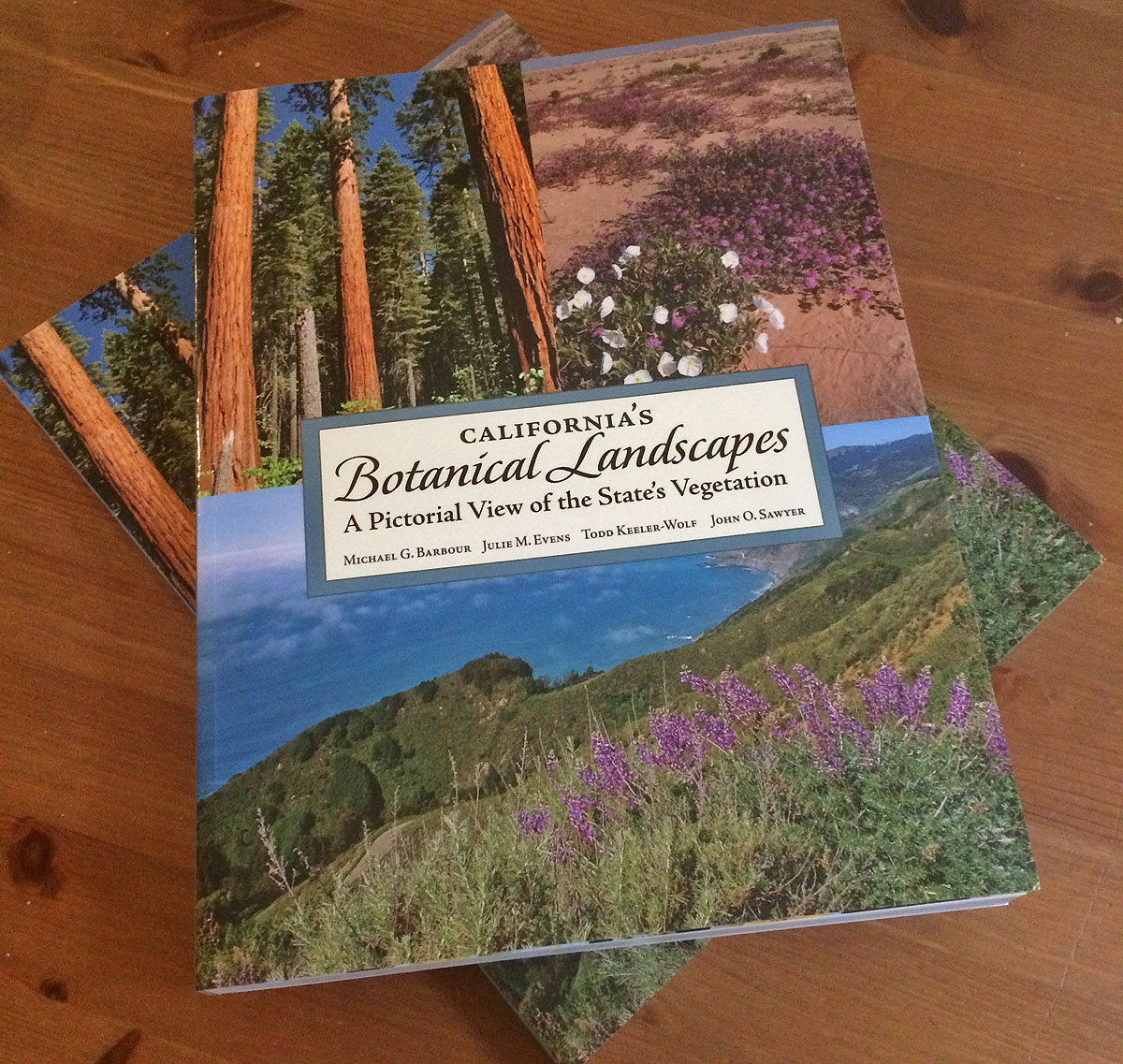
California’s Botanical Landscapes

A PICTORIAL VIEW OF THE STATE’S VEGETATION

By Michael G. Barbour, Julie M. Evens, Todd Keeler-Wolf, John O. Sawyer

I am very fortunate to have been a part of the book project now in print titled CALIFORNIA’S BOTANICAL LANDSCAPES: A PICTORIAL VIEW OF THE STATE’S VEGETATION (CNPS Press 2016, $39.95). Over the past 5+ years this book has evolved through volunteer efforts as a service to those passionate about California’s flora. The book is dedicated to Humboldt State University botany professor and North Coast CNPS founder John O. Sawyer. I am honored to have contributed time to the project with photographs for many of the ecoregions as well as coauthoring the Klamath Mountain chapter with Sawyer. This new book surveys our state’s native vegetation with photos and text exploring each of 14 ecoregions across the state. It includes a wide array of photographs of broad-scale vegetation patterns paired with in-depth, interpretive descriptions written by California’s top plant ecologists. 

California's Botanical Landscapes
California’s Botanical Landscapes

Continue reading “California’s Botanical Landscapes”

Owen Cheatham Redwood Grove

Or…Why Star Wars fans should love conifers–especially redwoods

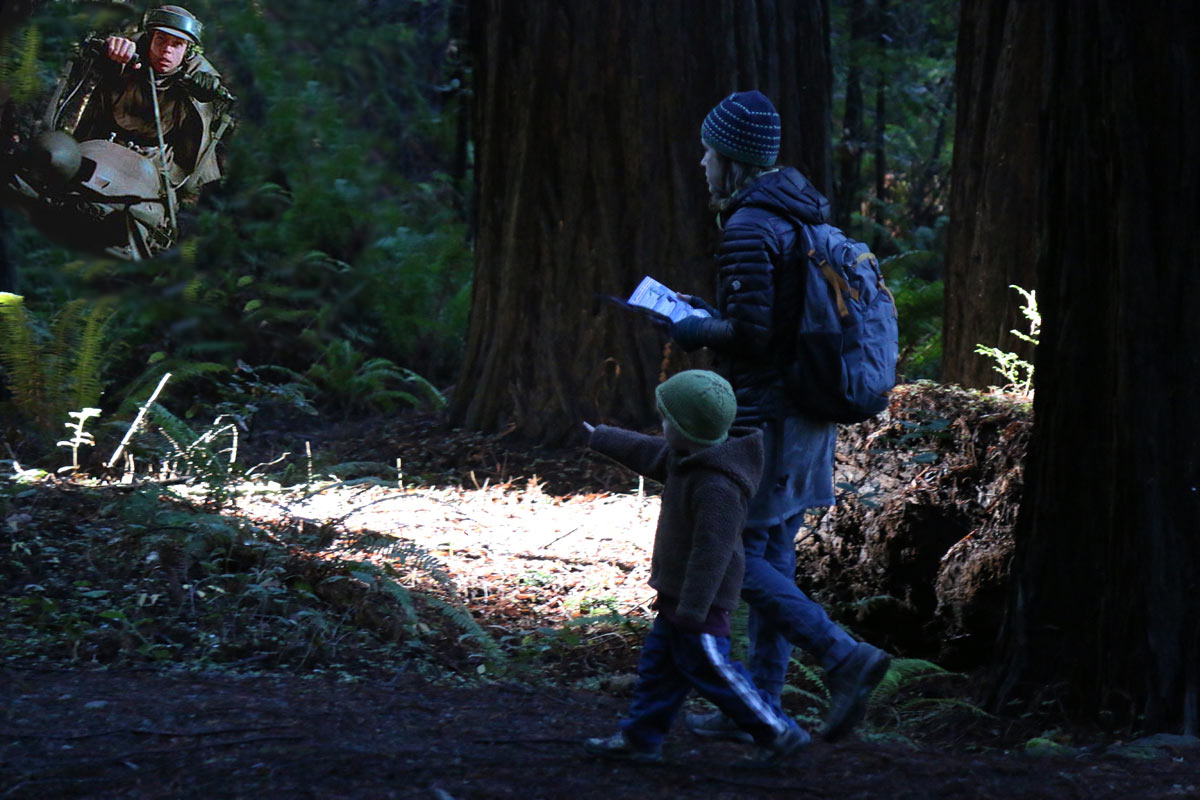
Return of the Jedi had a major influence on my experiences as a youth. I wanted to be able to use the force like Luke Skywalker, as do many children again in 2016. The Star Wars phenomenon has trickled down to our 3 year-old son from his Kindergarten classmates at Montessori as well, so we decided to seize the day and go for a hike that combined the legend of the force with the power of the redwoods, and explore where science fiction meets natural history.

redwood needles and cones

Redwoods might just be the grandest species in the plant world—from top to bottom they are the epitome of grandeur. The tallest redwood is 379’ (and still growing), while one of the most massive redwoods is a mere 320’ but has a basal diameter of nearly twenty-six feet. Those are some impressive beings! The largest redwoods grow in northwest California, where they favor mountain slopes and river terraces close to the ocean while also being situated in the summer fog belt. Across the coastal landscape redwoods domineer a highly specific range—when soil, water, and exposure are optimal. The Owen Cheatham Redwood Grove is a great place to visit these giants.

In search of redwoods and film history in the Owen Cheatham grove.
In search of redwoods and film history in the Owen Cheatham Grove.

Continue reading “Owen Cheatham Redwood Grove”